Member’s Spotlight

Member Spotlight: The Afternaut Group

Member Spotlight: The Afternaut Group 2633 298 Design Business Chamber Singapore

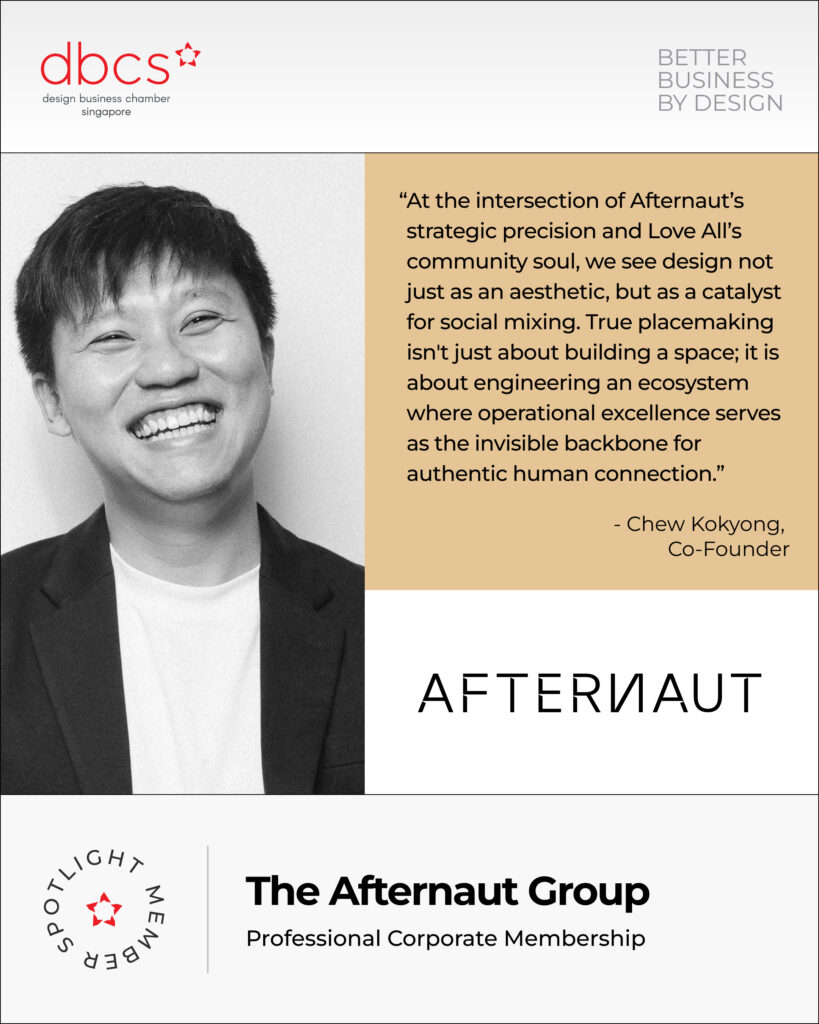
At the intersection of Afternaut’s strategic precision and Love All’s community soul, we see design not just as an aesthetic, but as a catalyst for social mixing. True placemaking isn’t just about building a space; it is about engineering an ecosystem where operational excellence serves as the invisible backbone for authentic human connection.

Chew Kokyong (Co-Founder)

The Afternaut Group 𝗷𝗼𝗶𝗻𝘀 𝗗𝗕𝗖𝗦 𝗮𝘀 𝗮 𝗣𝗿𝗼𝗳𝗲𝘀𝘀𝗶𝗼𝗻𝗮𝗹 𝗖𝗼𝗿𝗽𝗼𝗿𝗮𝘁𝗲 𝗠𝗲𝗺𝗯𝗲𝗿, bringing expertise in creating transformational spaces and experiences through experiential, spatial and digital design, with placemaking at its heart and a focus on shaping environments for present and future generations.

Explore their work: https://theafternaut.com/

If creating spaces and experiences that benefit living things and communities matters to you, this is your community.

Join DBCS: https://designbusinesschamber.glueup.com/org/dbcs/memberships/


PostInsta PostFB PostLinkIn PostYT PostOther

Like what you read?
Follow us on Instagram, Facebook, Linkedin and Youtube to get the latest updates!


Related Post

Member Spotlight: WeCreate Studio

Member Spotlight: WeCreate Studio 578 579 Design Business Chamber Singapore

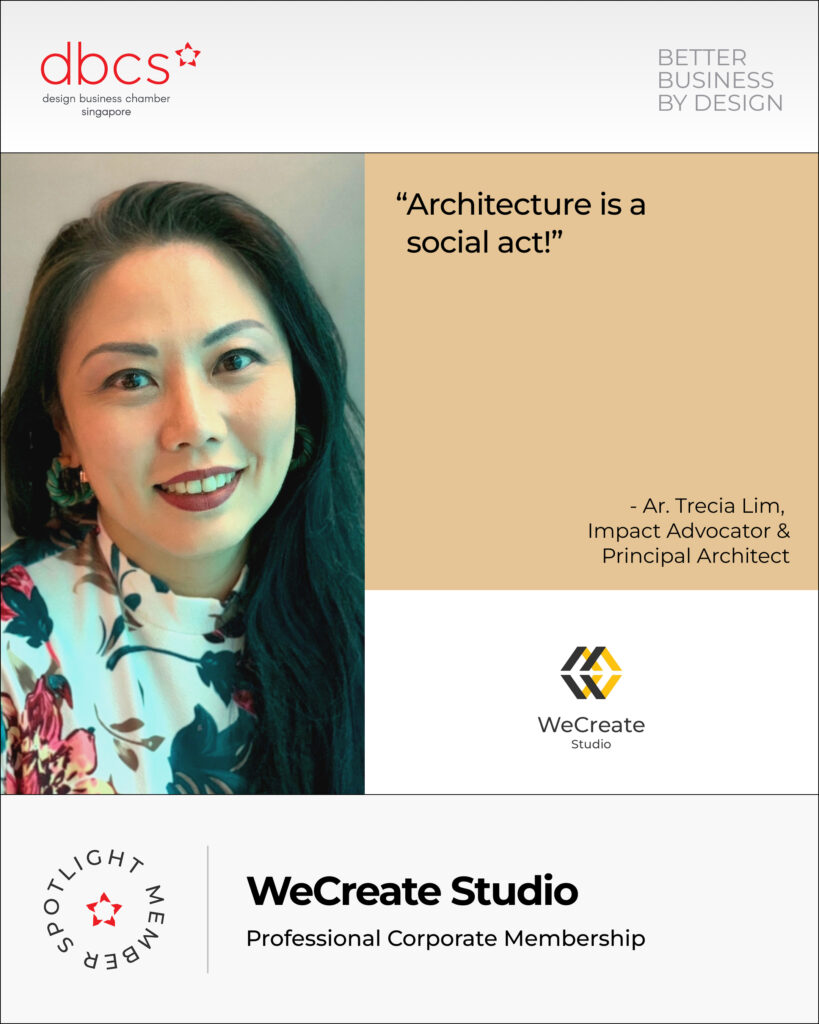
Architecture is a social act.

Ar. Trecia Lim (Impact Advocator & Principal Architect)

WeCreate Studio 𝗷𝗼𝗶𝗻𝘀 𝗗𝗕𝗖𝗦 𝗮𝘀 𝗮 𝗣𝗿𝗼𝗳𝗲𝘀𝘀𝗶𝗼𝗻𝗮𝗹 𝗖𝗼𝗿𝗽𝗼𝗿𝗮𝘁𝗲 𝗠𝗲𝗺𝗯𝗲𝗿, bringing its vision of using architectural design and planning to address global challenges. Guided by the United Nations Sustainable Development Goals, it focuses on community-driven solutions for issues such as poverty, education, clean water, sanitation and sustainable communities.

Explore their work: https://www.wecreate-studio.com/

If you are passionate about developing sustainable communities through community-driven and people-centred solutions, this is your community.

Join DBCS: https://designbusinesschamber.glueup.com/org/dbcs/memberships/


PostInsta PostFB PostLinkIn PostYT PostOther

Like what you read?
Follow us on Instagram, Facebook, Linkedin and Youtube to get the latest updates!


Related Post

Member Spotlight: Paper Carpenter Pte Ltd

Member Spotlight: Paper Carpenter Pte Ltd 2560 1304 Design Business Chamber Singapore

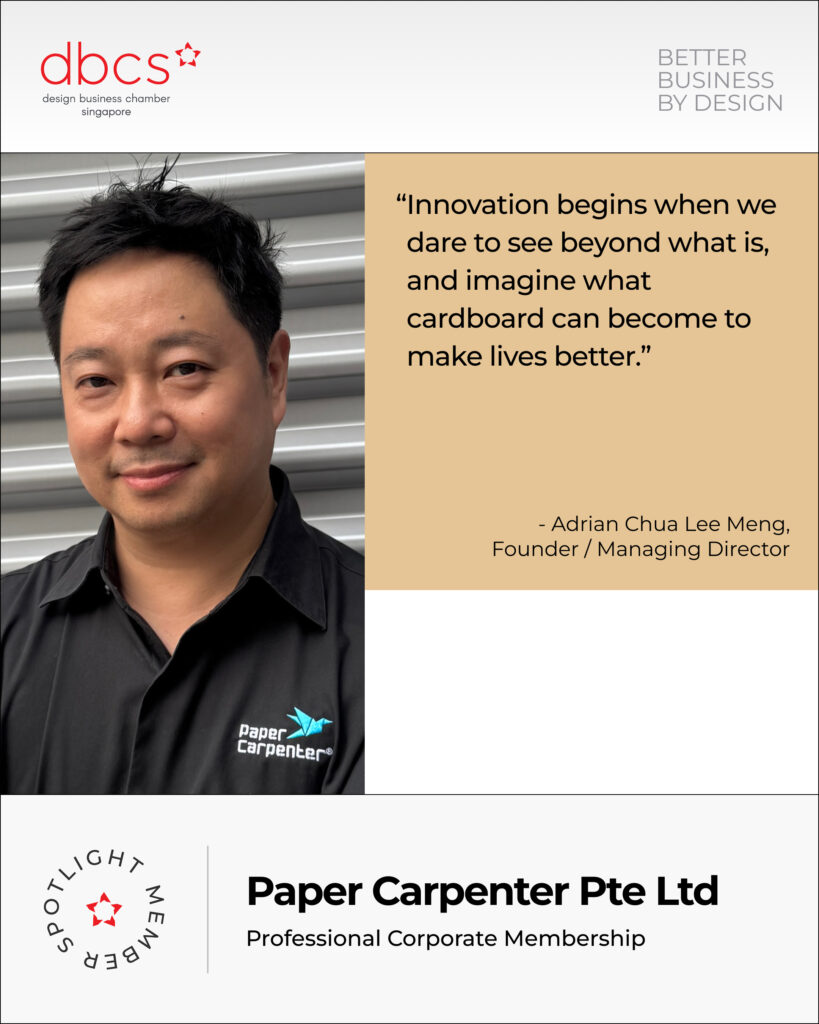
Innovation begins when we dare to see beyond what is, and imagine what cardboard can become to make lives better.

Adrian Chua Lee Meng (Founder / Managing Director)

Paper Carpenter Pte Ltd 𝗷𝗼𝗶𝗻𝘀 𝗗𝗕𝗖𝗦 𝗮𝘀 𝗮 𝗣𝗿𝗼𝗳𝗲𝘀𝘀𝗶𝗼𝗻𝗮𝗹 𝗖𝗼𝗿𝗽𝗼𝗿𝗮𝘁𝗲 𝗠𝗲𝗺𝗯𝗲𝗿, bringing its expertise in innovative cardboard design. Known for crafting exhibition booths, furniture, and creative installations, its team of cardboard artists blends Cardboard Carpentry™ skills, know-how, and tools seamlessly to bring your vision to life.

Explore their work: https://papercarpenter.com/

If you believe in preparing for opportunity, you belong here.

Join DBCS: https://designbusinesschamber.glueup.com/org/dbcs/memberships/


PostInsta PostFB PostLinkIn PostYT PostOther

Like what you read?
Follow us on Instagram, Facebook, Linkedin and Youtube to get the latest updates!


Related Post

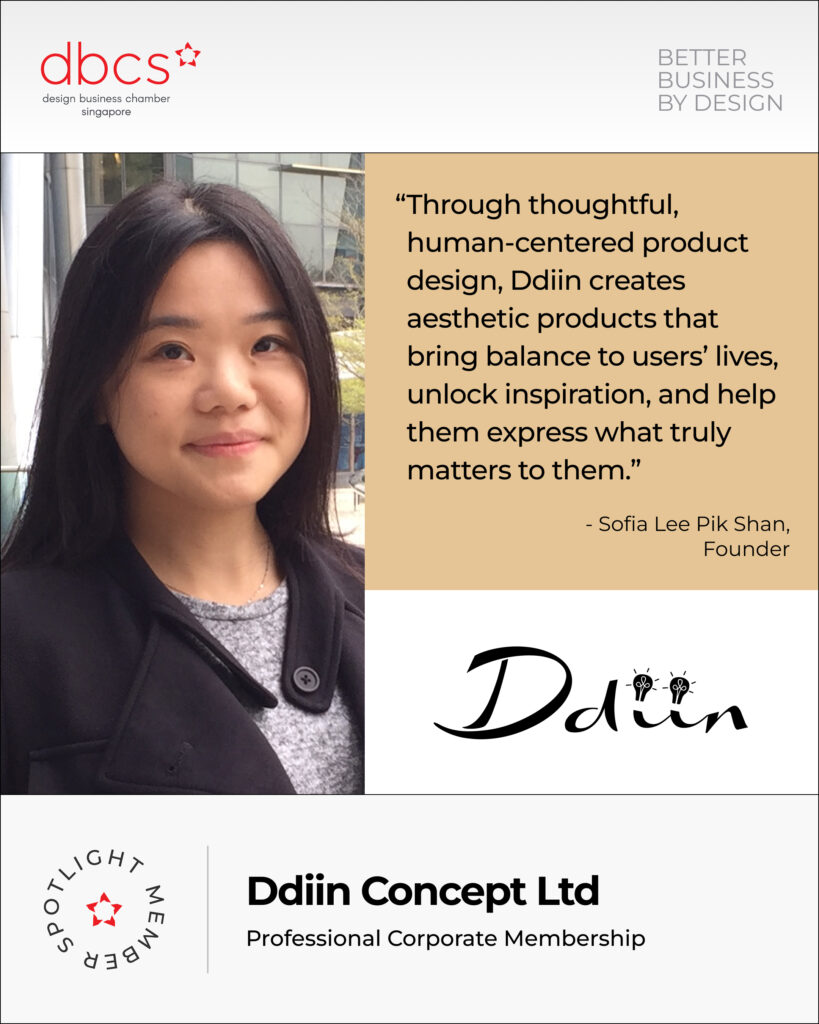
Member Spotlight: Ddiin Concept Ltd

Member Spotlight: Ddiin Concept Ltd 2560 2560 Design Business Chamber Singapore

Through thoughtful, human-centered product design, Ddiin creates aesthetic products that bring balance to users’ lives, unlock inspiration, and help them express what truly matters to them.

Sofia Lee Pik Shan (Founder)

Ddiin joins DBCS as a Professional Corporate Member, bringing a holistic approach to problem-solving grounded in desire, design, ideas, innovation, and need. Their multidisciplinary expertise spans brand design, industrial design, digital media, exhibition design, and installation design.

Explore their work: https://www.ddiin.com/

For those who put people at the heart of design, this is your community.

Join DBCS: https://designbusinesschamber.glueup.com/org/dbcs/memberships/


PostInsta PostFB PostLinkIn PostYT PostOther

Like what you read?
Follow us on Instagram, Facebook, Linkedin and Youtube to get the latest updates!


Related Post

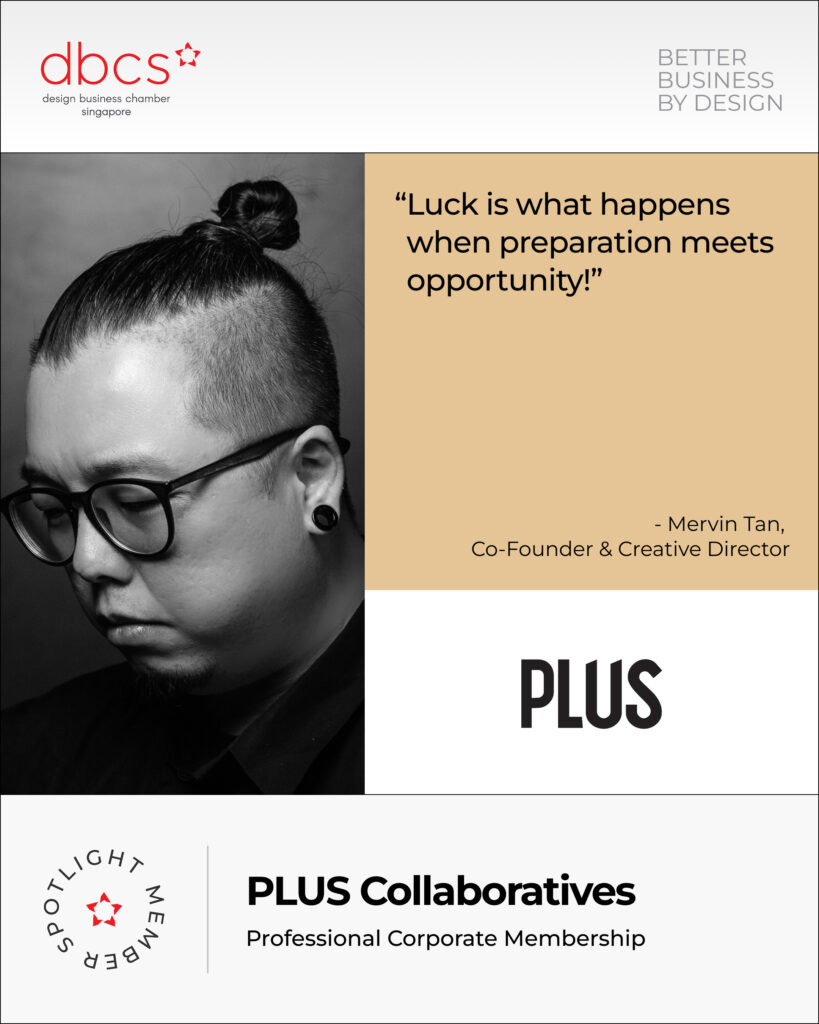
Member Spotlight: PLUS Collaboratives

Member Spotlight: PLUS Collaboratives 2240 1260 Design Business Chamber Singapore

Luck is what happens when preparation meets opportunity.

Mervin Tan (Co-Founder and Creative Director)

PLUS Collaboratives 𝗷𝗼𝗶𝗻𝘀 𝗗𝗕𝗖𝗦 𝗮𝘀 𝗮 𝗣𝗿𝗼𝗳𝗲𝘀𝘀𝗶𝗼𝗻𝗮𝗹 𝗖𝗼𝗿𝗽𝗼𝗿𝗮𝘁𝗲 𝗠𝗲𝗺𝗯𝗲𝗿, bringing a 360° approach to designing, curating and developing experiences across events, spaces, and communications. Grounded in research-led thinking, they translate ideas into intentional brand experiences from concept to execution.

Explore their work: https://plus-group.sg/

If you believe in preparing for opportunity, you belong here.

Join DBCS: https://designbusinesschamber.glueup.com/org/dbcs/memberships/


PostInsta PostFB PostLinkIn PostYT PostOther

Like what you read?
Follow us on Instagram, Facebook, Linkedin and Youtube to get the latest updates!


Related Post

Member Spotlight: 3iStudio Consultants

Member Spotlight: 3iStudio Consultants 2240 1260 Design Business Chamber Singapore

We don’t just build spaces, we create experiences that reflect your story, empower your people, and shape the way you work.

Wong Soon Foung (Founder)

𝟯𝗶𝗦𝘁𝘂𝗱𝗶𝗼 𝗖𝗼𝗻𝘀𝘂𝗹𝘁𝗮𝗻𝘁𝘀 𝗣𝘁𝗲 𝗟𝘁𝗱 𝗷𝗼𝗶𝗻𝘀 𝗗𝗕𝗖𝗦 𝗮𝘀 𝗮 𝗣𝗿𝗼𝗳𝗲𝘀𝘀𝗶𝗼𝗻𝗮𝗹 𝗖𝗼𝗿𝗽𝗼𝗿𝗮𝘁𝗲 𝗠𝗲𝗺𝗯𝗲𝗿, bringing a human-centered design philosophy that goes beyond physical spaces to create meaningful, personalised environments that reimagines how people feel, interact and perform.

Explore their work: https://www.3istudio.sg/

If you believe design should be intentional and transformative, this is your community.

Join DBCS: https://designbusinesschamber.glueup.com/org/dbcs/memberships/


PostInsta PostFB PostLinkIn PostYT PostOther

Like what you read?
Follow us on Instagram, Facebook, Linkedin and Youtube to get the latest updates!


Related Post

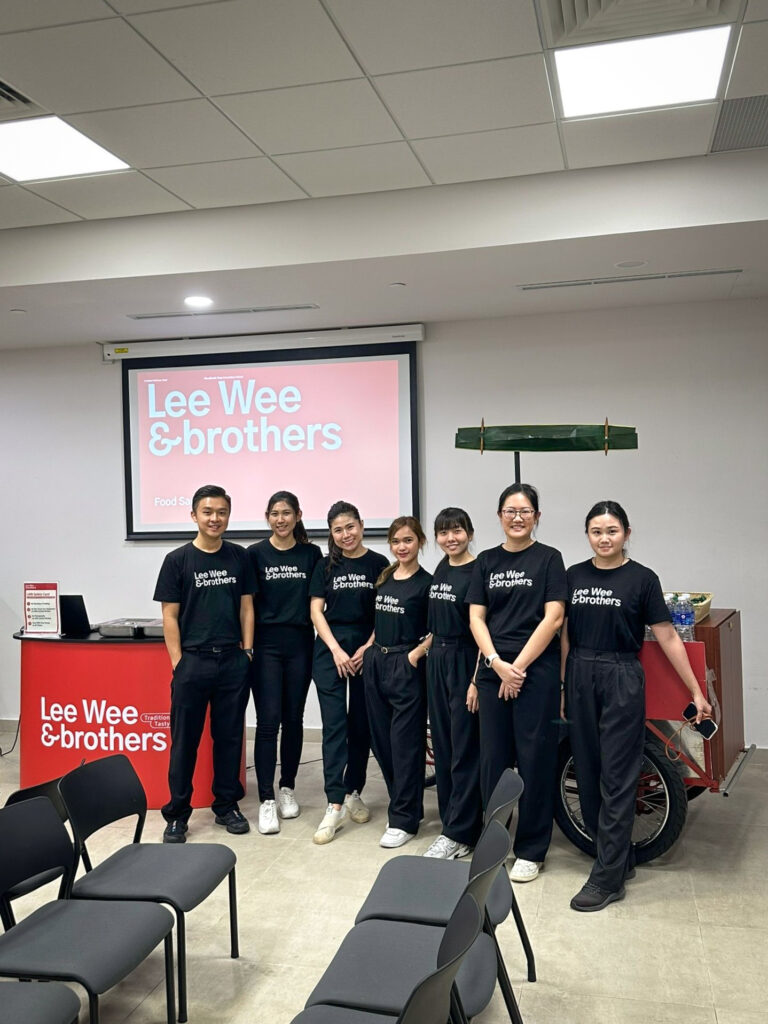
Wrapped in Flavor, Designed with Purpose: Darren Lee

Wrapped in Flavor, Designed with Purpose: Darren Lee 2116 1410 Design Business Chamber Singapore

Darren Lee is the General Manager of Lee Wee & Brothers and a proud second-generation owner passionate about honoring his family’s otah-making legacy. With an open mind and a deep appreciation for design as a strategic tool, he’s reshaped the brand to stay relevant, agile, and meaningful to today’s customers. to you?

You’ve led a powerful transformation of Lee Wee & Brothers from a traditional F&B brand into a modern lifestyle business. What role did design play in guiding that transformation, and how did you approach it as a non-designer?

Design helps us connect more deeply with our customers and stay agile in a constantly evolving market. It drove product innovation, enabling us to introduce exciting new formats, while also fostering a culture of collaboration, creative problem-solving, and continuous improvement within the team.

As a non-designer, I approached this by recognising the power of design to shape customer experiences and create meaningful connections. Staying open to fresh ideas and valuing design as a strategic tool allowed us to drive transformation and align with changing consumer expectations.

Many businesses think of design as packaging or visuals. For Lee Wee & Brothers, how has design influenced deeper decisions – from branding to customer experience and even product innovation?

We see design as a way to improve functionality and build meaningful connections. Our branding is crafted to resonate across generations, striking a balance between freshness and familiarity. In the customer journey, design shapes each interaction to be clear, efficient, and enjoyable — from how menus are presented to the flow of ordering and takeaway — while reinforcing our values and making the experience more memorable.

Design has also guided how we reimagine fresh takes on the classics. Our Frozen Otah Croquette, Otah Fries, and Otah Fuzhou Fish Ball are designed not just for convenience, but to appeal to a younger generation with fun, snackable formats — while still being familiar and nostalgic for older customers. These choices in format, flavour, and packaging help us stay relevant and bridge generational preferences, offering a new way to enjoy Otah.

Design is often seen as a cost rather than an investment, especially in tough times. What ROI—whether in customer loyalty, market reach, or internal culture—have you observed since the rebrand?

This has increased customer satisfaction, with more positive feedback reflecting the enhanced experience. Design has enabled us to expand our product offerings, with more options suitable for different occasions and events, making our products more accessible and attracting new customer segments. We’ve also seen steady sales growth, particularly for new products that cater to shifting consumer trends.

Internally, the rebrand has boosted our team’s sense of pride and purpose, driving innovation and improving customer service. It has also increased brand recognition, allowing us to stand out in the market and engage with customers more effectively.

You’ve shown that design can live beyond aesthetics—into product innovation, community storytelling, and even workplace inclusion when you hired a hearing-impaired staff. How do you cultivate a company culture where design thinking and creativity can thrive?

We believe that empowering our team to share their unique viewpoints leads to better decision-making and fresh ideas that challenge conventional thinking. We create a culture of open communication, collaboration, and diversity. Every team member, regardless of their role, is encouraged to contribute ideas. This openness fosters creativity, where innovative solutions emerge from diverse perspectives.

We also prioritize continuous learning and development, ensuring our team stays inspired and up-to-date with the latest design trends and business practices. This commitment to growth allows us to stay agile and adaptable, integrating design into all areas of our business—from product innovation to customer experience.

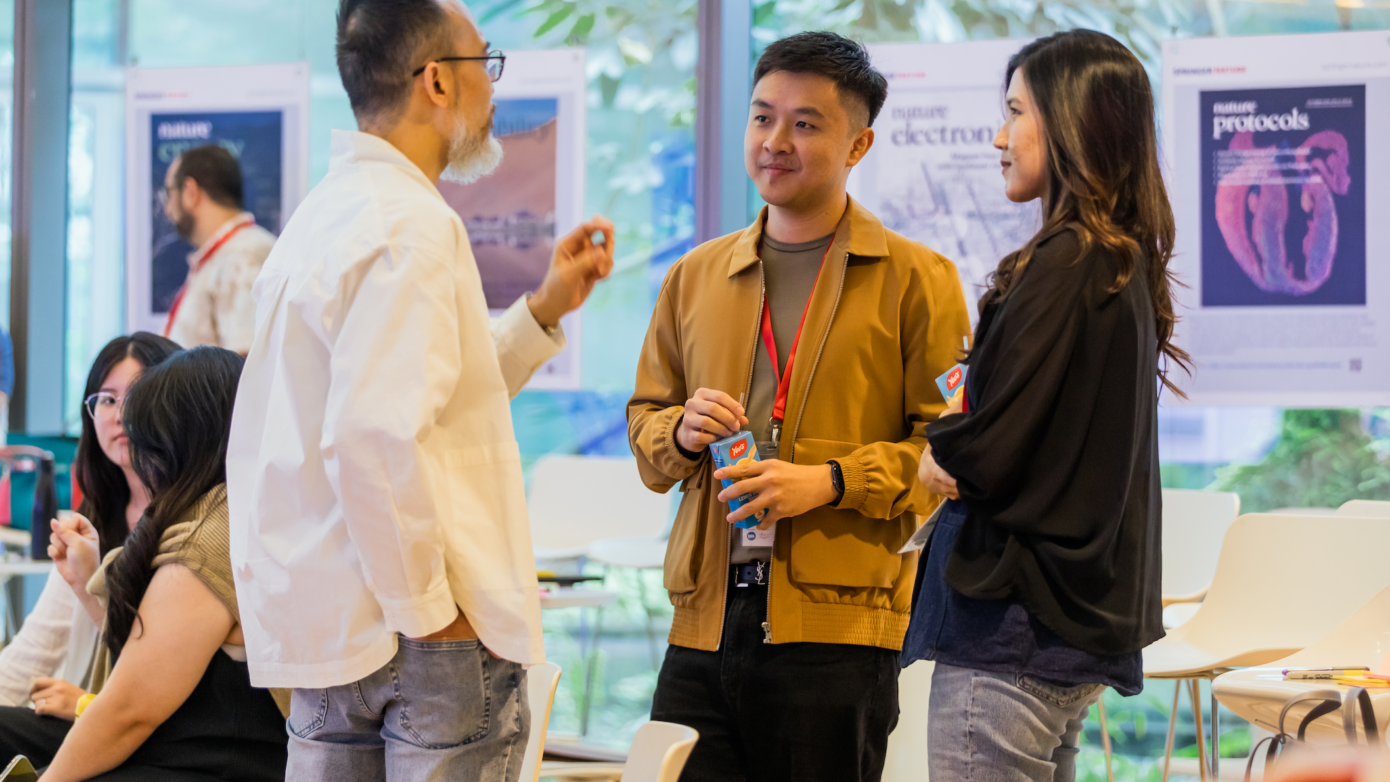
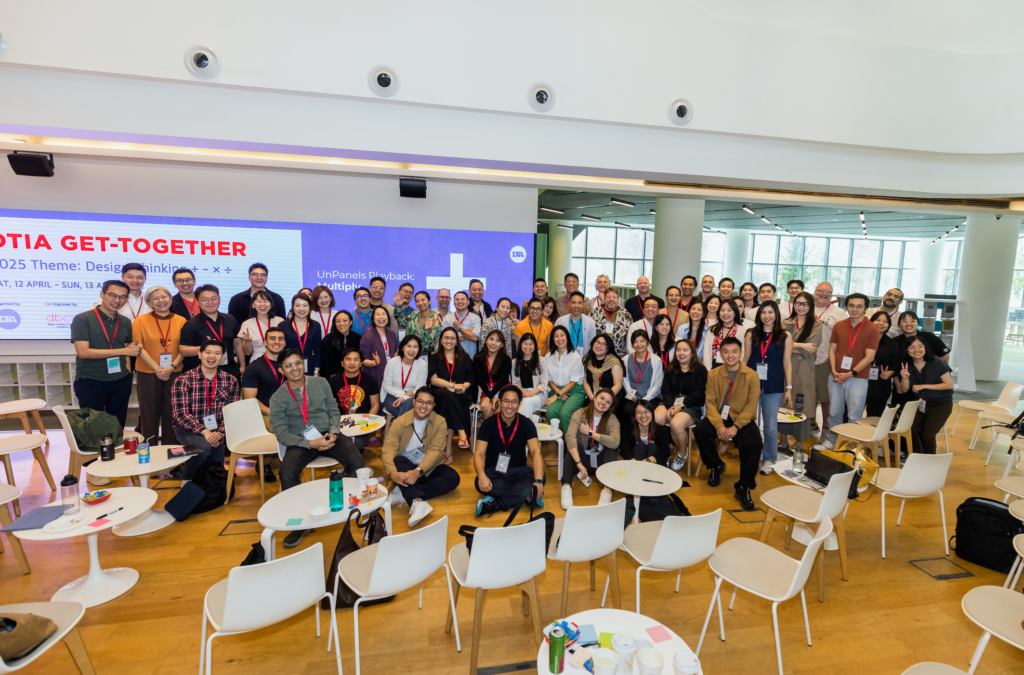
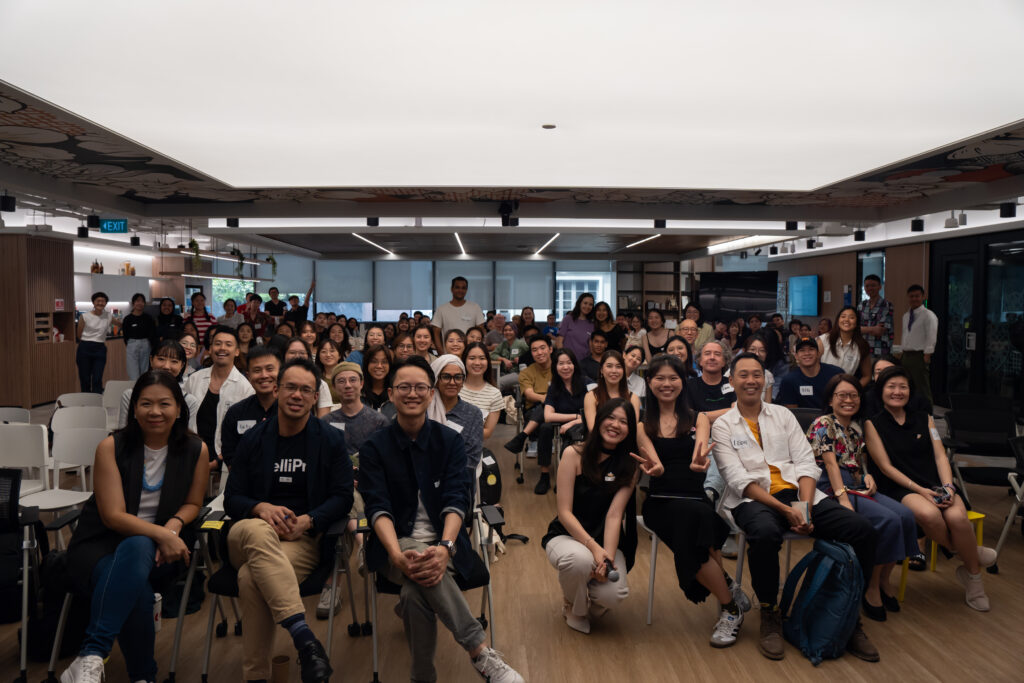
You recently attended our Design Thinking in Action (DTIA) Get-Together. What were your key takeaways, and how did the conversations there resonate with your own experience applying design thinking in a heritage F&B business?

One of the key takeaways was the importance of creating a space that encourages free thinking. This means fostering an environment where our team feels empowered to experiment, embrace new ideas, and not be constrained by traditional ways of doing things. This openness also ties into how we view technology, such as AI, as a partner rather than a solution in itself.

Another inspiring takeaway was the importance of true inclusive design. In the F&B industry, it’s not just about making our products accessible, but about creating experiences that emotionally and socially connect with our diverse customers. By ensuring every decision fosters dignity, acceptance, and freedom, we’re able to build a more inclusive, welcoming environment that reflects the values we stand for.

At DBCS, we believe that design has the power to drive transformation across sectors. From what you’ve seen at the DTIA Get-Together and within your own company, how can businesses embed design thinking more meaningfully—not just in products, but in operations and strategy?

I think businesses can embed design thinking meaningfully by integrating empathy-driven insights into operations—starting with customer research to redesign packaging and service touchpoints for both emotional and functional impact; involving frontline staff in rethinking workflows to boost efficiency and morale; using low-risk prototyping to test strategic ideas before full rollout; and fostering a company-wide design thinking mindset by training cross-functional teams in creative problem-solving, and rapid ideation, allowing innovation to emerge from all levels.

Planning an event? Connect with Lee Wee & Brothers for deliciously memorable catering today!

Darren Lee, General Manager of Lee Wee & Brothers

PostInsta PostFB PostLinkIn PostYT PostOther

Like what you read?
Follow us on Instagram, Facebook, Linkedin and Youtube to get the latest updates!


Related Post

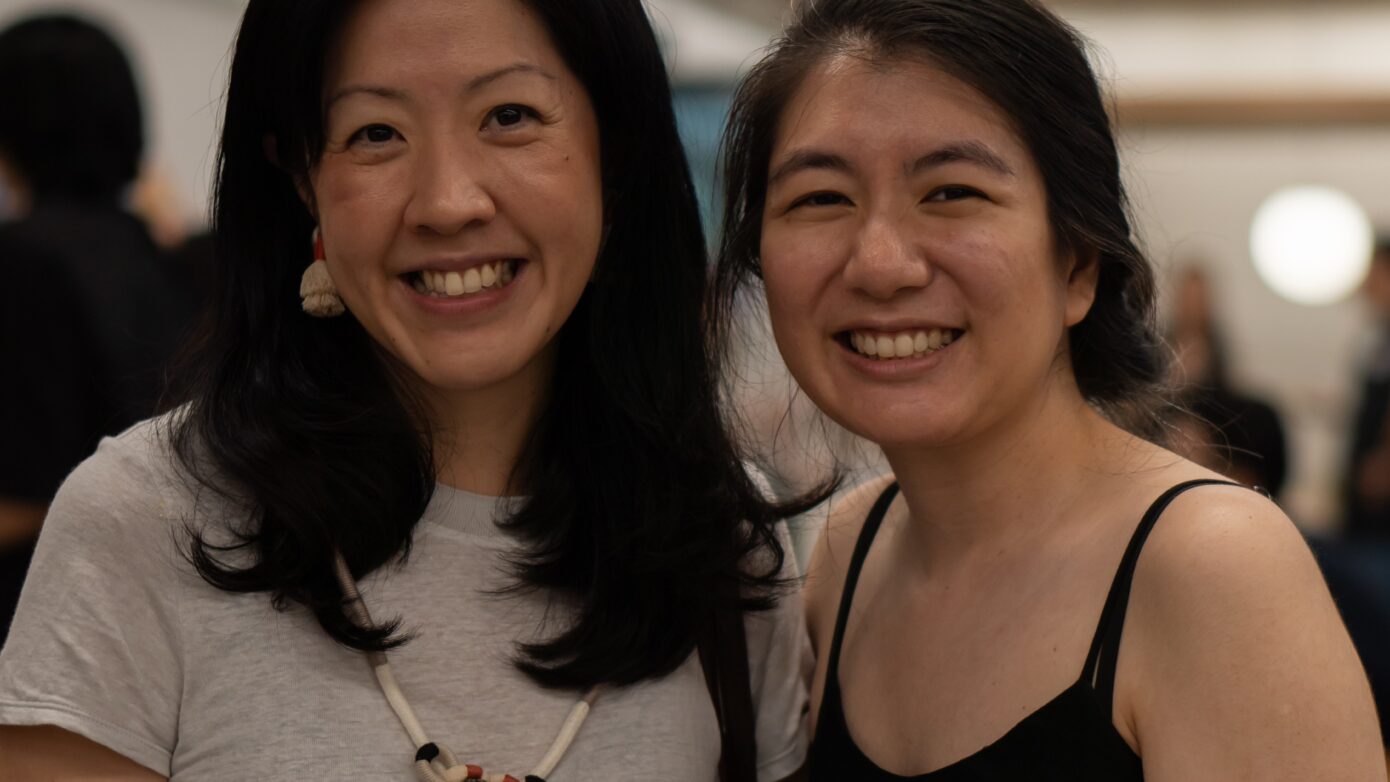
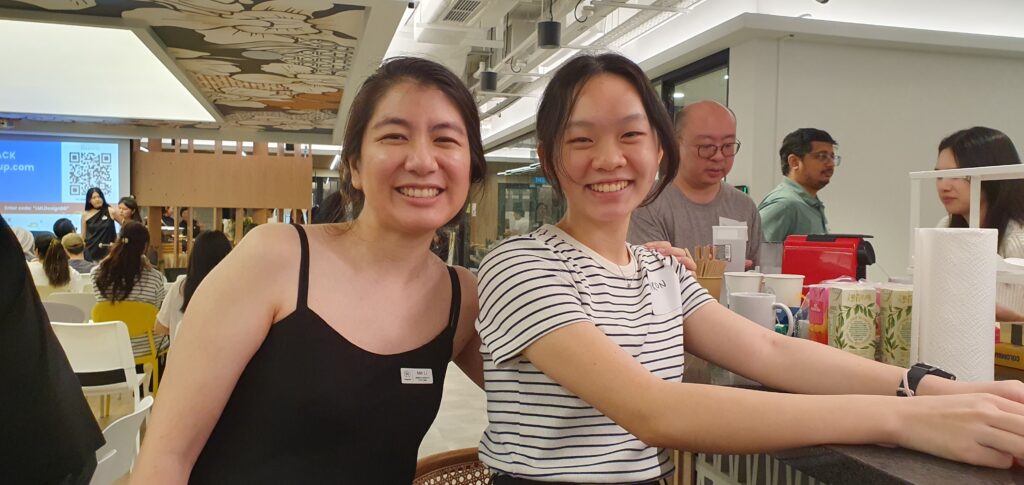
Building a Community for Designers: Min Li

Building a Community for Designers: Min Li 2560 2408 Design Business Chamber Singapore

Tell us more about yourself, and what does design mean to you?

I started out in industrial design and accumulated experience in diverse projects, including interior, graphic, packaging, web and traditional print, working in startups and SMEs before embarking on what I saw as the ‘final frontier’ — digital product design.

I founded DesignSG after many years and jobs as a lone designer, wishing I had a ‘library’ of designers to refer to when I needed advice or expertise in a specific specialisation. My personal definition of design is that it is an expression that can take nearly any form, created by an individual who leaves behind their own unique, personal imprint in the process of creation.

You can find my thoughts on design in this Medium article from a few years ago.

How has it been like building DesignSG to what it is today?

It has definitely been a long journey of endless learning and innovation! The chance to seek out and discover opportunities to create and be creative has also been one of the most fulfilling parts of this adventure, not just for myself, but also for others in the DesignSG team.

How has your role as a community leader evolved, and what keeps you motivated?

In the early stages of building the community, we curated conversation topics very closely. These days, the conversations are mostly organic, with just a touch of light moderation. It’s been an evolution from a directive style of leadership to a more facilitative approach, driven by a larger core team and a supportive sponsor. This has provided us with the motivation to be more intentional with our programs and meetups.

What do you hope to achieve for DesignSG in the next few years?

We are focusing most of our energy on a special project for 2025, with the goal of having it ready to share in time for this year’s Singapore Design Week (SDW). We also aim to collaborate more with other communities and feature cross-community partnerships.

Which part of DesignSG’s culture makes it special?

The community was built from the ground up and grew organically to meet designers’ needs. Some of our volunteers are not designers, which shows that what we do resonates with everyone, including those outside design circles.

What is one tip you’d like to share with fellow designers?

Embrace the parts of you that are considered strange or weird, because this may be the superpower you need to give design its human touch. With the use of AI in creative fields taking off and becoming the future norm, I think this is the key differentiating factor that designers can harness in a sea of AI-generated output.

What is one design tool you cannot live without?

A whiteboard – I have a 1.2m long one at home!

Join the DesignSG Telegram group today and connect with fellow design enthusiasts.

Min Li, Founder of DesignSG Telegram Community

PostInsta PostFB PostLinkIn PostYT PostOther

Like what you read?
Follow us on Instagram, Facebook, Linkedin and Youtube to get the latest updates!


Related Post

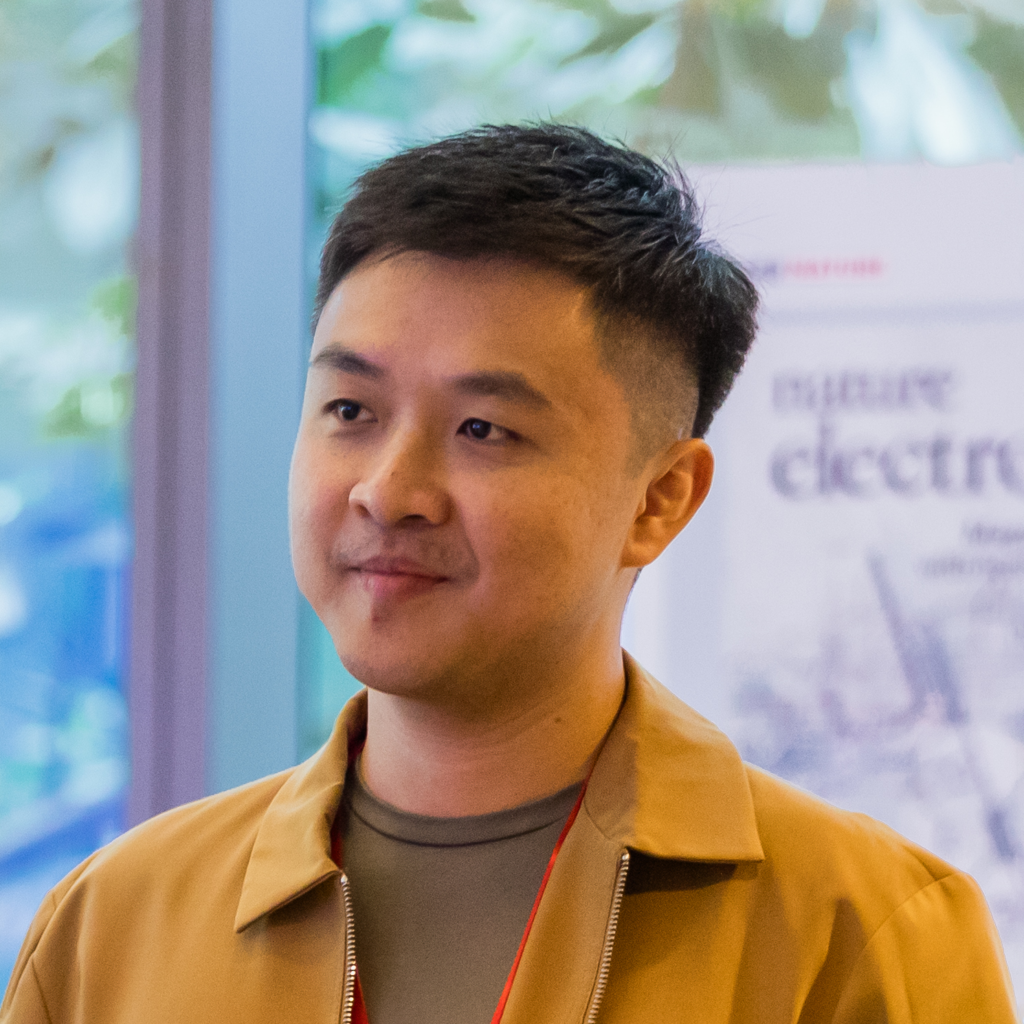
UX Design in DBS Bank: Mark Law

UX Design in DBS Bank: Mark Law 2560 1482 Design Business Chamber Singapore

Tell us more about yourself, and what does design mean to you?

I started in industrial design before expanding into the broader discipline of experience design, eventually working at the intersection of UX, strategy and branding. Now I lead the consumer banking design team at DBS.

For me, design is about storytelling—crafting narratives through visuals, interactions and experiences to shape behaviour and influence outcomes. It’s about creating solutions that resonate and making a tangible difference, subtly guiding users toward better and more intuitive experiences.

Design also has a unique way of aligning teams, bringing diverse perspectives together to work toward a shared vision that serves both users and the business.

What do you see as the next big evolution for design?

The next big leap is design becoming even more embedded in AI and automation. Design will shift from crafting individual products to shaping adaptive, predictive systems. Personalisation at scale will play a key role and the challenge will be to balance data-driven decisions with empathy.

Designers will need to orchestrate experiences across areas like finance, healthcare and education—spaces where real-time adaptation can make a significant impact.

What drives you to push the boundaries of design in a structured industry like banking?

Banking has many opportunities to drive meaningful change. I’m driven by the challenge of making complex systems intuitive and customer-first. The satisfaction comes from solving the tension between regulations, business goals and user needs.

How do you promote a design thinking mindset across multidisciplinary teams that might not have a design background?

I focus on building trust and encouraging collaboration through open discussions, workshops and shared goals. When teams see design as a collaborative process rather than a handoff, it creates alignment and fosters a shared sense of purpose.

What is one design tool you cannot live without?

I don’t like getting too dependent on any single tool, but one ‘tool’ that I find incredibly powerful is rapid prototyping. It’s a powerful way to learn early and fast. By putting ideas into tangible form, you quickly uncover issues, test solutions and refine concepts.

It turns abstract thinking into actionable insights, helps in aligning teams and moves projects forward with confidence.

Who is your favourite designer and why?

It’s hard to choose, but I’d have to say Jonathan Ive. His ability to blend industrial, digital and experiential design into iconic, ownable experiences is inspiring. His work is thoughtful, refined, seamlessly integrating form and function.

More than that, Ive’s designs have shaped culture—setting new standards for how products feel, look and function, influencing not just industries but the way people interact with technology in their daily lives.

If you could turn back time, what advice would you give to your younger self?

I’d tell myself to embrace failure earlier. I spent too much time trying to get things perfect the first time, but design is iterative—it’s about learning and evolving. Also, I’d remind myself to take care of my health. The work will always be there, but if you burn out, you’re no good to your team or yourself.

Mark Law, Head of Design, DBS Bank

PostInsta PostFB PostLinkIn PostYT PostOther

Like what you read?
Follow us on Instagram, Facebook, Linkedin and Youtube to get the latest updates!


Related Post

Women in Law: Pioneering the Future of Intellectual Property

Women in Law: Pioneering the Future of Intellectual Property 1080 901 Design Business Chamber Singapore

How crucial is intellectual property for business growth, particularly in specialised industries?

Intellectual Property (IP) is crucial for business growth and risk reduction in any industry. IP provides legal protection, enhances competitive advantage, generates revenue, and ensures financial and operational stability. By strategically managing IP assets, businesses can safeguard their ideas and innovations, build strong market positions, and mitigate both internal and external risks.

How do you stay updated on intellectual property law trends and integrate them into your practice?

The first priority is to be updated on business trends. Since business constantly responds to or creates consumer needs, it is dynamic and constantly changing. The law always has to play “catch up” with business. Once the business model is well understood, the next step is to apply the law as it pertains to the business.

My team and I continually attend relevant training by IP regulators and specialised IP associations both in Singapore and globally. We also keep ourselves updated with the latest decided cases from our Singapore courts as well as other countries.  Networking with our counterparts in Singapore and globally facilitates the exchange of ideas in the practice of IP law.

What are the key intellectual property considerations for international businesses entering Asia Pacific?

Understanding local IP, business laws and regulations is key. Unlike regions like the Middle East, Europe, or the Americas, where countries in each region often have similar laws and regulations, the laws and regulations of countries in the Asia Pacific region are as diverse as the cultures of each country.

Another important factor is understanding local cultural sensitivities. Since IP involves both legal and business aspects, a successful IP strategy must consider the language and culture of the consumer. For example, a simple English word used in a brand name may sound inappropriate in a local language.

Additionally, staying informed about government policies and initiatives related to business and IP is crucial, as they can impact business operations and IP strategies. Engaging in lobbying and advocacy efforts can influence IP and business policy development and enforcement practices.

Lastly, leveraging regional initiatives that aim to harmonise IP laws and practices across Asia, and utilising trade agreements like the Comprehensive and Progressive Agreement for Trans-Pacific Partnership (CPTPP), can help strengthen IP protection.

What inspired you to establish a specialised IP law practice, and how has your vision evolved?

I have been practising IP law for more than 25 years. At the start of my practice, my clientele consisted of foreign IP owners from western countries, Japan, Korea, and Taiwan, who understood the value of IP, hence investing in IP protection was a given.

However, this was not the case for Singaporean businesses. Around 2000, I started noticing larger Singapore SMEs beginning to take an interest in IP. However, since the traditional law firm works on a business model of “billable hours”, it was very difficult to service the Singapore SMEs.

In-depth IP knowledge could not be shared within a few hours. I saw a need for Singapore SMEs to receive proper IP advice and realised the only way to do that was to establish my own firm, free from the constraints of billable hours.

Alpha & Omega Law Corporation turns 21 this year and we still keep our focus on helping and sharing with Singapore SMEs.

What are the main challenges and opportunities you foresee in intellectual property law in the future through the advancement of technology?

Some challenges include determining IP ownership for AI-generated creations and whether AI can be considered an inventor, as advancements in technology raise questions about how to allocate rights.

Advances in biotechnology, such as gene editing, present ethical and legal dilemmas regarding patentability and the scope of IP protection.

Additionally, the global nature of e-commerce platforms, combined with the Internet’s anonymity and lack of verification standards, has increased website impersonations and counterfeit listings, making it easier for counterfeit goods to cross borders while complicating enforcement efforts.

Lastly, striking a balance between incentivising innovation through strong IP protections and ensuring public access to essential technologies, such as life-saving drugs and clean energy solutions, is an ongoing challenge.

On the other hand, opportunities exist with blockchain technology, which can enhance IP management by providing indisputable records of IP ownership, transactions, and licensing agreements, thereby reducing disputes and improving transparency.

AI can also be used to monitor and detect IP infringements more efficiently, such as identifying counterfeit products or unauthorised use of copyrighted materials online.

Finally, leveraging digital platforms to educate creators, businesses, and the public about IP rights can enhance awareness and compliance.

Can you share a life experience that shaped you both personally and professionally?

Life experiences over nearly six decades have shaped me personally and professionally. I grew up in a lower-middle class, traditional Catholic family. My parents emphasised strong family values, including integrity, kindness, diligence, sharing, adaptability, and supporting one another.

I bring these same values to my professional life. These lessons continue to guide me as I navigate the complexities of protecting and enforcing IP rights in a globalised world for my clients.

Share a favourite book/movie/TV show that has left a lasting impression on you, and why?

The Secret Seven and Famous Five books by Enid Blyton, as well as the Hardy Boys and Nancy Drews series, brought adventure, suspense, excitement, and imagination into my life while growing up many decades ago – especially during school holidays when there was nothing to do!

If you could turn back time, what advice would you give to your younger self?

Don’t chase the corporate ladder; be yourself and believe in your abilities. Be grateful for everything, especially the challenges. Enjoy the outdoors and sports, and always put others first.

Renee Xavier, Founder and Director, Alpha & Omega Law Corporation


PostInsta PostFB PostLinkIn PostYT PostOther

Like what you read?
Follow us on Instagram, Facebook, Linkedin and Youtube to get the latest updates!


Related Post